
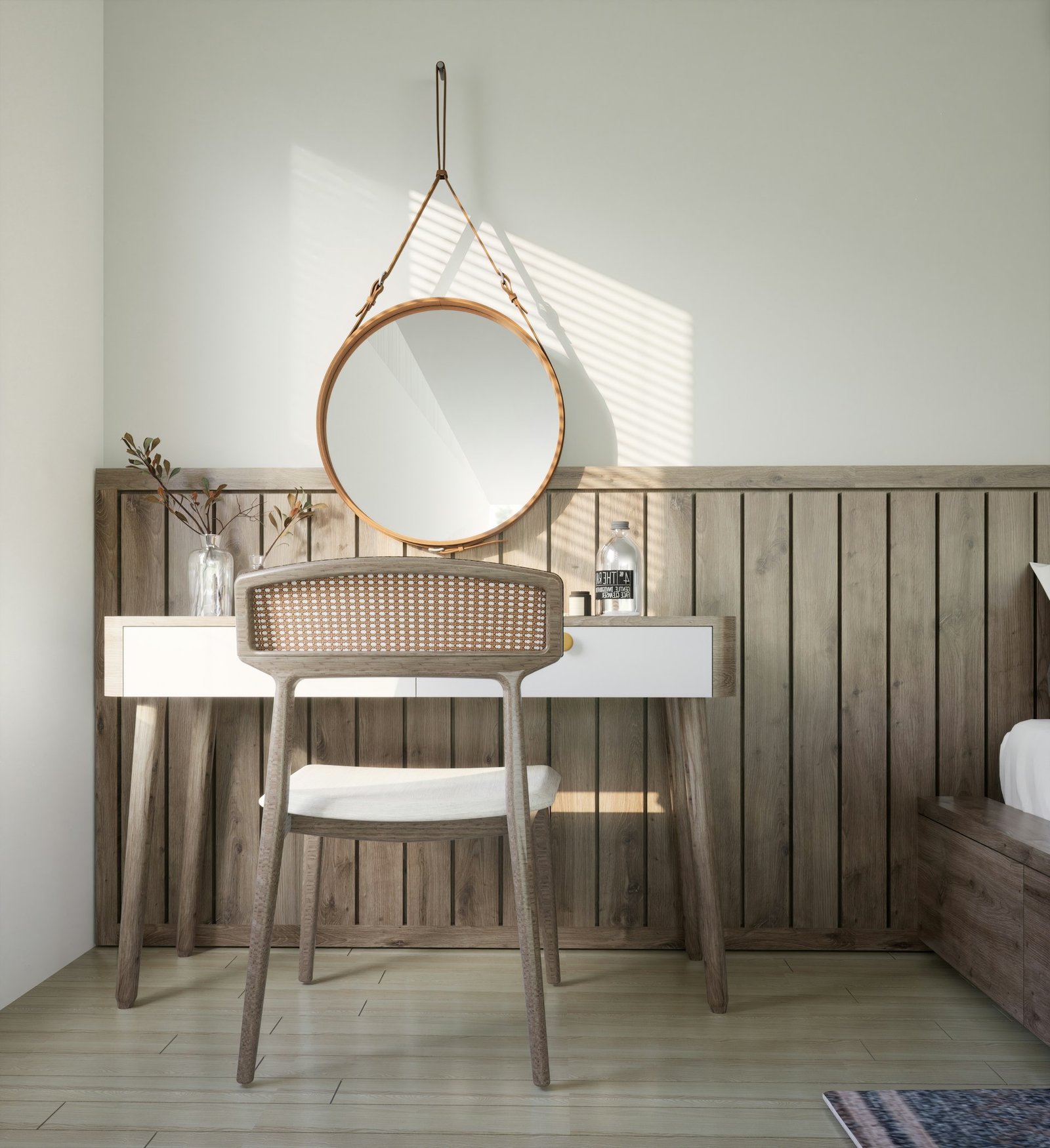
The Scandinavian Interior Design Guide: How to Get That Clean, Cozy Nordic Look at Home
There’s a reason Scandinavian interior design has taken over Pinterest, Instagram, and pretty much every design publication for the past decade — and it has nothing to do with trends.
It works.
A well-executed Scandi space feels calm, intentional, and deeply livable. It’s not cold or sterile the way minimalism can sometimes feel. It’s not maximalist or layered like boho. It sits in a beautiful middle ground — clean enough to breathe, warm enough to actually live in.
And once you understand the principles behind it, it’s one of the most achievable design styles there is — even on a real budget.
This guide covers everything: the history, the key principles, the palette, the furniture to look for, and the specific Amazon finds that will help you get the Scandinavian look in your own home.
What Is Scandinavian Interior Design?
Scandinavian design emerged in the early 20th century from Denmark, Sweden, Norway, Finland, and Iceland — countries known for long, dark winters and a deep cultural appreciation for the home as a place of warmth, comfort, and beauty.
The design philosophy that developed there was shaped by necessity as much as aesthetics. With limited sunlight for much of the year, homes needed to maximize light. With long winters spent largely indoors, spaces needed to feel genuinely comfortable — not just visually beautiful.
The result is a design style built on a handful of timeless principles that have proven remarkably adaptable across cultures and budgets.
The 6 Core Principles of Scandinavian Design
1. Functionality First
In Scandinavian design, beauty and function are never in opposition — they’re the same thing. Every piece of furniture, every object, every material choice should serve a purpose. Decorating for decoration’s sake alone is not the Nordic way.
This doesn’t mean your home should feel sparse or joyless. It means every beautiful thing you bring in should also do something — a throw that’s actually warm, shelves that actually hold things, a lamp that actually lights the room well.
2. Light Is Everything
Scandinavian homes are obsessed with light — and for good reason. In countries where the sun sets at 3pm in winter, every source of natural and artificial light is precious.
In practice this means: white and pale walls to reflect light, windows left unobstructed or dressed in sheer fabrics, mirrors used strategically, and warm artificial lighting layered throughout a room rather than relying on a single overhead source.
3. Natural Materials
Wood, stone, linen, wool, leather, and cotton are the building blocks of Scandi interiors. Synthetic materials are minimized. Natural textures add warmth without visual noise — they’re felt as much as seen.
Light-toned woods are especially central to the style: pale oak, birch, and pine bring warmth to a room without darkening it.
4. A Restrained Color Palette
Scandinavian design is not colorless — but it is restrained. The foundation is always white, off-white, or very light gray. From there, colors are introduced carefully: soft sage, dusty blue, warm terracotta, black as an accent, and always anchored by the warmth of natural wood.
The goal is a palette that feels calm and cohesive — not beige and boring, but intentionally quiet so the textures and forms can speak.
5. Quality Over Quantity
Scandi interiors are edited. There’s less furniture, fewer decorative objects, more breathing room. What’s there is well-made, purposeful, and lasting. This is the opposite of the “more is more” philosophy — and it’s what gives Scandinavian rooms their sense of calm.
When shopping on a budget, this principle is actually good news: you need fewer pieces, which means you can spend more on the ones that matter most.
6. Hygge
Perhaps the most famous Scandinavian concept to cross over into global design consciousness is hygge (pronounced “hoo-gah”) — a Danish and Norwegian word that roughly translates to coziness, comfort, and wellbeing. It’s the feeling of a candle lit on a dark evening, a soft blanket, a warm drink, good company.
Hygge isn’t a design style exactly — it’s a feeling that good Scandinavian design creates. And it’s achieved through warmth, softness, candlelight, natural materials, and spaces that feel genuinely comfortable to inhabit.
The Scandinavian Color Palette
Building a Scandi color palette is simpler than you might think. Here’s the formula:
Base (60% of the room): White, warm white, off-white, or very light warm gray. Walls, larger furniture pieces, bedding.
Secondary (30% of the room): Light natural wood tones, soft linen, cream. Floors, furniture, textiles.
Accent (10% of the room): Choose one or two muted accent colors — dusty sage, slate blue, warm terracotta, blush, or charcoal. Use in throw pillows, small decor items, a single plant pot.
Always: Black as a graphic accent — thin metal frames, lamp bases, picture frames. It adds definition and keeps the palette from feeling too soft.
Scandinavian Furniture: What to Look For
Sofas and Seating
Look for clean-lined sofas with visible legs (not skirted), in natural linen, boucle, or soft gray upholstery. Avoid tufting, ornate details, or heavy profiles. The silhouette should be simple and architectural.
👉 Shop Scandinavian Style Sofa on Amazon →
Coffee Tables
Light wood with simple lines. Round or oval shapes work well in Scandi spaces — they soften the angularity of architectural elements. Avoid glass-topped tables, which can feel cold.
👉 Shop Light Wood Coffee Table Round on Amazon →
Dining Tables
Pale oak or birch dining tables with clean, tapered legs are the most quintessentially Scandinavian furniture form. Pair with simple wooden or upholstered chairs — mismatched chairs in a cohesive palette is a very Scandi move.
👉 Shop Scandinavian Dining Table on Amazon →
Shelving
Open shelving in light wood or white, styled with restraint. A Scandi shelf has breathing room — not every inch is filled. Books, a plant, a single ceramic object, and empty space are equally important.
👉 Shop Floating Wood Shelves on Amazon →
Accent Chairs
The classic Scandi accent chair has a simple wooden frame with a cushioned seat — think mid-century modern but softer. Shell chairs, tulip chairs, and simple upholstered armchairs all work well.
👉 Shop Scandinavian Accent Chair on Amazon →
Textiles: Where the Warmth Comes From
Scandinavian rooms can look stark in photos but feel incredibly warm in person — and that warmth almost entirely comes from textiles. This is where hygge lives.
Throws: Wool, chunky knit, or waffle weave in cream, oatmeal, or soft gray. Draped over a sofa arm or folded at the foot of a bed.
👉 Shop Wool Throw Blanket on Amazon →
Rugs: Natural fiber rugs (jute, sisal, wool) in simple patterns — stripes, simple geometric, or plain. Layer a sheepskin over the top for extra hygge points.
👉 Shop Scandinavian Style Wool Rug on Amazon →
Sheepskin: A real or faux sheepskin draped over a chair or placed in front of a fireplace is one of the most recognizable Scandi touches there is.
👉 Shop Faux Sheepskin Rug on Amazon →
Pillows: Linen in neutral tones, simple embroidered patterns, or subtle texture. Not too many — restraint is key.
👉 Shop Linen Throw Pillows Scandinavian on Amazon →
Curtains: Sheer linen or cotton in white or off-white. The goal is to filter light softly without blocking it.
👉 Shop Sheer Linen Curtains on Amazon →
Lighting the Scandinavian Way
Lighting is not an afterthought in Scandi design — it’s one of the most important elements. Here’s the approach:
Layer it. Never rely on a single overhead light. Use floor lamps, table lamps, pendants, and candles together to create warm, multi-dimensional light.
Go warm. Bulbs should be warm white — 2700K or lower. Cool white lighting instantly kills the hygge atmosphere.
Candles everywhere. Scandinavians burn more candles per capita than any other region in the world. A candle on a windowsill, a cluster on a coffee table, a single taper at dinner — candles are not decorative extras in Nordic culture. They’re essential.
Statement pendants. A sculptural pendant light over a dining table or in a living room is a signature Scandi design move. Look for simple geometric shapes in matte black, brass, or natural materials.
👉 Shop Geometric Pendant Light on Amazon →
👉 Shop Scandi Floor Lamp on Amazon →
👉 Shop Taper Candles Set on Amazon →
Decorating with Restraint: The Scandi Approach to Objects
This is where many people go wrong when trying to achieve a Scandinavian look — they fill every surface. True Scandi decorating is about editing as much as adding.
The rule of three: Style surfaces in groupings of odd numbers — one, three, or five objects. Leave breathing room between them.
What belongs: A single ceramic vase, a plant, a small stack of books, a candle, a wooden bowl, one piece of art above the sofa. Each object has space to exist on its own terms.
What doesn’t belong: Clutter, collections of mismatched small items, anything that doesn’t have a clear purpose or bring genuine joy.
Plants: Scandi interiors always have greenery — but usually one or two statement plants rather than a jungle. A fiddle leaf fig, a large monstera, or a simple potted fern. Pots in simple terracotta, white ceramic, or natural wood.
👉 Shop White Ceramic Planter on Amazon →
Scandinavian Design vs. Japandi: What’s the Difference?
You may have noticed a newer term emerging alongside Scandinavian design: Japandi — a hybrid of Japanese and Scandinavian aesthetics.
The two styles share a lot: both value simplicity, natural materials, craftsmanship, and functional beauty. The differences are subtle but meaningful:
| Scandinavian | Japandi | |
|---|---|---|
| Warmth | Warmer, cozier (hygge) | Cooler, more meditative |
| Color | Whites and light neutrals | Deeper earthy neutrals, wabi-sabi tones |
| Wood tones | Light (birch, pine, pale oak) | Darker (walnut, bamboo, dark oak) |
| Texture | Soft textiles prominent | More restrained, harder surfaces |
| Feel | Cozy and livable | Serene and contemplative |
If you find pure Scandinavian too light and airy, Japandi might be your sweet spot. If pure Japanese minimalism feels too stark, lean Scandinavian.
How to Start: A Room-by-Room Scandi Checklist
Living Room
- White or warm white walls
- Light wood coffee table or side tables
- Linen or boucle sofa in neutral tone
- Layered rugs (jute base + sheepskin or wool accent)
- Warm throw draped over sofa arm
- Statement floor lamp
- Candles clustered on coffee table
- One or two plants (simple white or terracotta pots)
- Simple art above sofa (black frame, muted palette)
- Floating shelves styled with restraint
Bedroom
- White or linen bedding
- Warm wood nightstands or floating shelves
- Bedside lamp with warm bulb
- Simple linen curtains
- Sheepskin beside the bed
- One plant on nightstand or dresser
- Candle for evening atmosphere
- Minimal surface clutter
Kitchen and Dining
- Open shelving in light wood
- Simple dinnerware in white or cream
- Linen napkins and woven placemats
- Wooden cutting board displayed on counter
- Statement pendant over dining table
- Fresh herbs in a simple pot on the windowsill
Your Scandinavian Starter Shopping List
| Item | Link |
|---|---|
| Linen Throw Pillows | Shop → |
| Wool or Waffle Throw | Shop → |
| Faux Sheepskin Rug | Shop → |
| Scandi Wool Area Rug | Shop → |
| Sheer Linen Curtains | Shop → |
| Floating Wood Shelves | Shop → |
| Light Wood Coffee Table | Shop → |
| Scandinavian Accent Chair | Shop → |
| Geometric Pendant Light | Shop → |
| Scandi Floor Lamp | Shop → |
| Taper Candles Set | Shop → |
| White Ceramic Planter | Shop → |
The Bottom Line
Scandinavian interior design is not about buying a specific set of furniture or achieving a certain look in photos. It’s about creating a home that genuinely feels good to live in — calm, warm, functional, and beautiful in a quiet way.
Start with light walls. Add natural wood wherever you can. Layer soft textiles for warmth. Light a candle. Edit ruthlessly.
That’s really all there is to it — and it works in any size space, at any budget level.
If you want to experiment with the look before committing to any purchases, check out our guide to the best AI room design tools — you can visualize a Scandinavian-style room in your actual space in minutes.
This post contains affiliate links. If you purchase through these links, I may earn a small commission at no extra cost to you. I only recommend products I genuinely love.
Related Posts: